Introduction
In the pantheon of professional sports, few symbols carry as much emotional weight, cultural prestige, and visual grandeur as the championship ring. While athletes competing in individual sports receive medals, trophies, or championship belts, North American professional team sports have immortalized victory through the enduring tradition of the championship ring. Far more than mere pieces of fine jewelry, these heavily customized adornments serve as the ultimate tangible rewards for sweat, sacrifice, and collective triumph at the highest levels of athletic competition.
From modest, understated bands of yellow gold bearing a single, modest diamond in the early 20th century to modern, multi-thousand-dollar masterpieces encrusted with hundreds of glittering diamonds and precious gemstones, the evolution of the championship ring mirrors the commercialization, technological advancement, and cultural explosion of professional sports. This comprehensive industry guide explores the fascinating historical roots of the championship ring, the strategic shift from trophies to wearable heirlooms, the intricate manufacturing and design techniques behind modern creations, and the deep cultural significance these rings hold for players, organizations, and devoted fans alike. Furthermore, tracing this evolution reveals how master jewelers turned athletic victories into enduring works of wearable art, creating a unique sub-industry within luxury manufacturing.
The Humble Beginnings: From Pocket Watches to the First Rings
Before the championship ring became the definitive symbol of sports supremacy, early professional sports leagues experimented with various forms of commemorative memorabilia to reward victorious teams.
Early 20th-Century Traditions and Pocket Watches
During the late 19th and early 20th centuries, baseball and early football leagues rarely awarded rings. Instead, team owners, league executives, and local merchants often gifted victorious athletes engraved pocket watches, charm pendants, or decorative tie pins. For instance, the 1922 New York Giants famously awarded pocket watches to their World Series-winning players. However, pocket watches proved impractical for active athletes; they were easily lost, damaged during daily life, or left tucked away in drawers rather than proudly displayed to the public.
The Birth of the Championship Ring Concept
The transition from pocket watches to rings began gradually in Major League Baseball during the 1920s and 1930s. The New York Yankees famously introduced one of the earliest true championship rings in 1927 following their legendary World Series sweep, though the exact timeline of the very first ring remains a subject of sports history debate. The 1922 New York Giants also commissioned commemorative rings for some players, establishing an early visual precedent. Rings offered a distinct practical advantage over watches: they could be worn constantly on the hand, serving as a permanent, public declaration of athletic excellence and team loyalty that could be seen by teammates, fans, and rivals alike.
Transitioning into Team Identity
As these early rings gained popularity, team executives began integrating specific team logos, baseball motifs, and the exact year of the championship directly into the metal design. This shift transformed the ring from a generic piece of jewelry into a distinct corporate and athletic symbol of franchise pride, laying the groundwork for the highly competitive design culture seen in professional sports today.
Overcoming Early Production Limitations
In these formative decades, ring production was limited by manual casting techniques and restricted access to high-grade gemstones. Jewelers relied heavily on hand-engraved die-stamping methods, producing pieces that were structurally simple yet rich in sentimental value, setting the stage for future industrial scaling.
Mid-Century Expansion: Standardization and Growing Bling
As professional sports leagues expanded their national footprints and television broadcast revenues increased following World War II, championship rings began to evolve in both physical size and artistic complexity.
The Post-War Boom and League Standardization
The post-war era brought economic prosperity and a surge in attendance across Major League Baseball, the National Hockey League, and the nascent National Football League. Team owners recognized that commissioning higher-quality championship rings served as an effective recruitment tool, a morale booster, and a powerful marketing asset. During the 1950s and 1960s, rings began featuring larger center diamonds, bold team logos rendered in colored enamel, and personalized player names and jersey numbers stamped directly onto the shanks.
Defining the Classic Championship Aesthetic
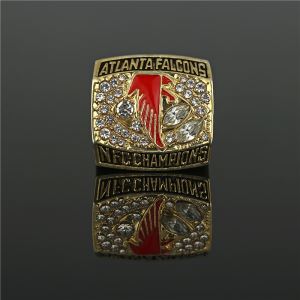
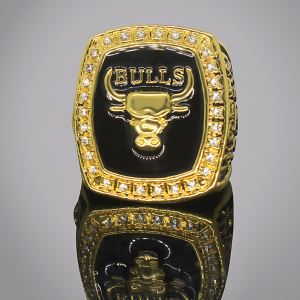
By the 1970s, the design language of the championship ring had matured into a standardized architectural template. A typical ring from this era featured a prominent top face (the bezel) housing a large gemstone or cluster of diamonds surrounded by raised team lettering. The side shanks began telling a narrative story of the championship season, displaying the team's regular-season record, playoff series scores, the final championship opponent, and the player's individual surname. This multi-paneled design approach transformed each ring into a chronological historical artifact of that specific team's championship run.
The Rise of Corporate Sponsorship and Team Branding
During this period, sports franchises also realized the PR value of these rings. Photographs of star players flashing their championship rings on magazine covers and national television broadcasts became standard media tropes, cementing the ring as a cultural status symbol far beyond the boundaries of the stadium.
Expanding Beyond Baseball to Football and Hockey
While baseball pioneered the ring tradition, the National Football League and National Hockey League quickly adopted and expanded upon the concept. Super Bowl rings, in particular, grew rapidly in physical scale and gemstone luxury, transforming into massive symbols of gridiron dominance that captured the imaginations of millions of viewers worldwide.
Modern Mastery: Technology, Customization, and Extravagance
Entering the 21st century, advancements in computer-aided design, precision stone-setting, and metallurgical engineering propelled championship rings into an entirely unprecedented realm of luxury, artistic expression, and astronomical financial value.
The Shift to Computer-Aided Design (CAD) and Rapid Prototyping
Modern championship ring manufacturing relies heavily on advanced digital technologies. Master jewelers and specialized design houses no longer depend solely on hand-carved wax molds. Instead, they use sophisticated 3D CAD software to collaborate directly with team owners, coaches, and veteran players. This technology allows designers to incorporate hidden mechanisms, rotating bezels, removable components, and microscopic interior engravings-such as exact stadium coordinates, player statistics, or secret motivational quotes-into the architecture of the ring.
Breaking Records with Extravagant Gemstone Counts
Today's championship rings are breathtaking displays of high-end jewelry craftsmanship, frequently utilizing hundreds or even thousands of natural and lab-grown diamonds, custom-cut rubies, sapphires, and yellow gold or platinum alloys. Total gemstone weights routinely exceed 10 to 20 carats per ring. For example, recent Super Bowl, NBA Finals, and World Series rings have incorporated symbolic gemstone counts-such as 328 diamonds representing specific offensive plays or exact franchise milestones. These massive rings often weigh several ounces, requiring specialized ergonomic band profiles to ensure they remain comfortable for players to wear during celebratory events.
Tiered Distribution and Organizational Hierarchy
Modern championship rings are no longer reserved exclusively for active star players. Professional sports franchises now commission multi-tiered distribution structures. Tier-one rings, featuring full gemstone encrustation and solid precious metals, are awarded to starting players, head coaches, and primary executives. Tier-two and tier-three rings-often referred to as "B" and "C" quality rings containing fewer diamonds or simulated gemstones-are distributed to assistant coaches, scouts, medical staff, front office personnel, and sometimes even loyal stadium workers, ensuring that everyone who contributed to the organizational victory shares in the physical legacy.
The Fan Replica Market and Commercial Collectibility
In addition to player rings, sports franchises now produce high-end fan replicas and commemorative mini-rings. These items have spawned a massive secondary collector's market, where vintage player rings from historic championship runs sell at public auctions for hundreds of thousands of dollars, proving that the cultural footprint of the championship ring extends far beyond the locker room.
Integrating Sustainable Materials and Ethical Sourcing
In response to changing consumer values, modern championship ring manufacturers increasingly prioritize ethical sourcing, utilizing recycled precious metals and conflict-free lab-grown gemstones without sacrificing any of the dazzling brilliance or structural integrity demanded by professional athletes.
The Cultural, Emotional, and Psychological Impact of the Championship Ring
Beyond their undeniable material wealth and intricate design complexity, championship rings hold an irreplaceable psychological and emotional value for those who earn them.
Cementing Athletic Immortality and Shared Brotherhood
For a professional athlete, a career is fleeting, often defined by injuries, sudden trades, and a short window of physical peak performance. The championship ring serves as a permanent, tangible anchor for a lifetime of hard work, early morning practices, physical sacrifices, and unwavering team cohesion. Whenever a player looks down at their hand, the ring instantly transports them back to the locker room celebration, the final buzzer, and the shared brotherhood of a championship squad.
The Ultimate Symbol of Franchise Legacy and Ownership Pride
For team owners, general managers, and coaching staffs, commissioning a magnificent championship ring is the ultimate validation of strategic vision and roster building. It acts as a physical monument to an organization's winning culture, serving to attract elite free agents in future seasons and inspiring fans with a visible proof of excellence that hangs proudly in team museums and corporate boardrooms across the globe.
Conclusion
The championship ring has evolved over the past century from a humble pocket watch and a simple gold band into one of the most coveted, extravagant, and culturally significant artifacts in global professional sports. By blending advanced metallurgical engineering, computer-aided design, rich historical storytelling, and master craftsmanship, modern jewelers have turned athletic victory into permanent wearable art. Whether preserving the historic grit of early baseball legends or dazzling modern audiences with multi-carat diamond displays, the championship ring remains the ultimate physical manifestation of teamwork, resilience, and ultimate triumph. Ultimately, these rings do more than mark a single winning season; they secure a timeless legacy that athletes and organizations proudly pass down through generations as the eternal gold standard of sports achievement.